Saeed Ghani Calls for Strict Enforcement of Labour Laws, Workplace Safety Standards in Sindh
By Qurban Ali Khushik
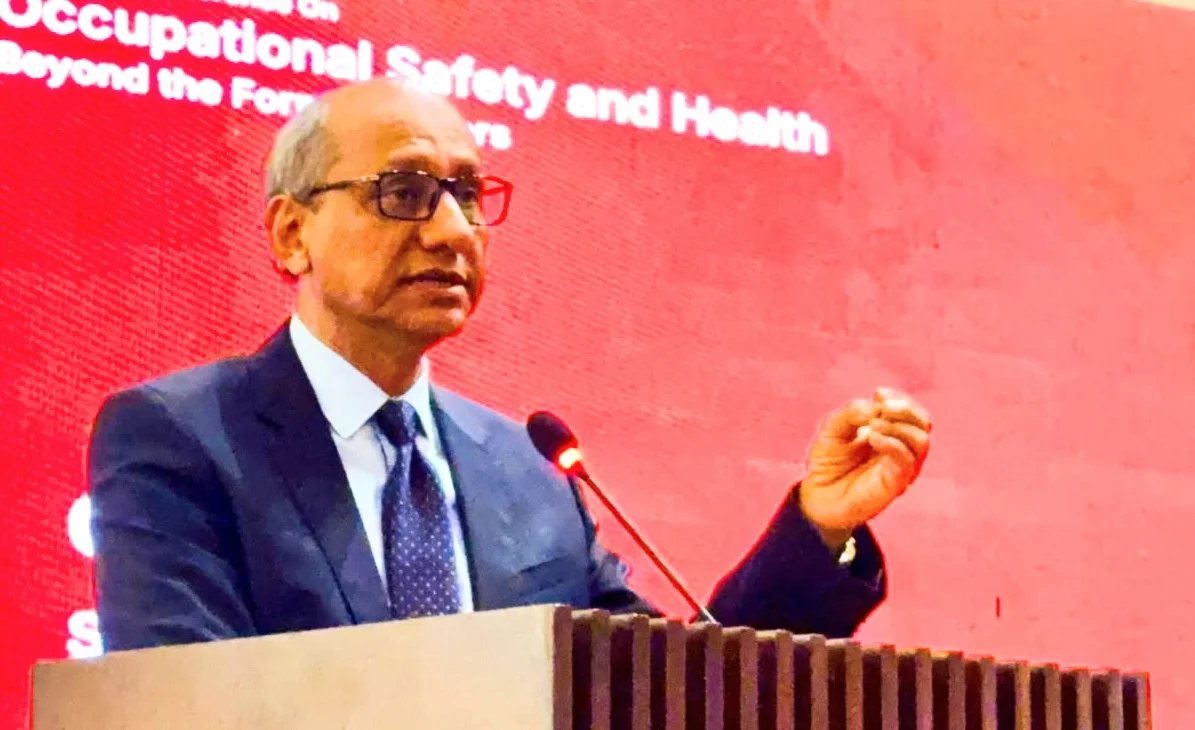
KARACHI : Sindh Minister for Labour, Human Resources and Social Protection Saeed Ghani has stressed the need for strict enforcement of labour laws and occupational safety and health (OSH) standards, saying that stronger cooperation among the government, employers and workers is essential to improving the business environment and working conditions.
He was addressing the 19th OSH Excellence Awards ceremony, organised by the Employers’ Federation of Pakistan (EFP) at a local hotel, as the chief guest. More than 100 companies were recognised for their performance in workplace safety and health in 2026.
Ghani congratulated the EFP on organising the event and appreciated companies that had demonstrated a commitment to providing safe, healthy and productive working environments. However, he observed that the number of companies receiving such awards over the past 19 years should have reached thousands.
He said industrialists had begun paying greater attention to workplace safety following the Baldia factory tragedy, although some employers had taken safety measures even before the incident. He added that export-oriented industries appeared to give greater priority to occupational safety and health, stressing that consistent standards must be enforced across all industries.
The minister said the number of workers employed in Pakistan’s informal sector was several times higher than that in the formal sector, making worker registration a major challenge. The Sindh Labour Department had initiated the registration of formal-sector employees and signed an agreement with NADRA to facilitate the process. Registered workers are being provided with Benazir Mazdoor Cards.
Explaining the hurdles in registering informal-sector workers, Ghani said contributions to the Sindh Employees’ Social Security Institution (SESSI) had discouraged some employers from registering all their workers. He also acknowledged problems involving certain employees of the relevant institution.
He said efforts to address these issues had begun four to five years ago through consultations with employers and workers’ representatives. The aim was to develop a formula under which employers’ contributions could be calculated on the basis of annual business turnover or another agreed proportion rather than a fixed contribution for every worker. Such a mechanism, he said, would encourage employers to register their entire workforce.
Ghani added that amendments had been made to the relevant law, opening the way for broader employee registration beyond industrial workers alone.
Referring to the COVID-19 pandemic, the minister said the closure of industries had left thousands of workers unemployed, prompting the Sindh government to consider financial assistance for affected workers. However, the absence of comprehensive and reliable workers’ data across the country made it difficult to identify those in need. He said an earlier rollout of Benazir Mazdoor Cards could have helped the government maintain a database and provide timely assistance.
He maintained that the provincial government was continuing its efforts to register workers in the formal, informal and private sectors despite resistance from some officials within its own department.
Emphasising the importance of a culture of responsibility, Ghani said the lack of awareness and compliance was not limited to workers but could also be found among employers. Citing enforcement of motorcycle helmet laws as an example, he said resistance to stricter rules should be weighed against the lives that effective enforcement could save.
He stressed that even a minor workplace accident could have far-reaching consequences for an injured worker and their entire family. While companies demonstrating good safety practices deserved recognition, he said, action must also be taken against industrial establishments that failed to provide adequate protection for their employees.
The minister said the government recognised that a conducive business environment and improved labour conditions depended on stronger relations between the government and employers. Providing businesses with the necessary facilities, support and resources was essential to economic stability and workers’ prosperity.
He added that the Sindh government and the Labour Department were working to improve industrial conditions and provide better facilities to businesses. Protecting workers’ health, safety and legal rights, he said, required the joint efforts of the government, employers and workers.
Ghani expressed hope that the award-winning companies would share their experiences and encourage wider adoption of effective occupational safety and health practices. He said such knowledge-sharing would particularly benefit small and medium-sized enterprises, helping them improve workplace safety standards.
He also acknowledged the International Labour Organization’s (ILO) contribution to promoting decent work, occupational safety and health, and responsible business practices in Pakistan.
The ceremony was also addressed by EFP President Majyd Aziz, ILO Country Director for Pakistan Geir Thomas Tonstøl, and World Health Organization (WHO) Representative and Head of Mission in Pakistan Dr Luo Dapeng.
Sindh Labour Secretary Sajid Jamal Abro, Pakistan Peoples Party Labour Bureau Sindh President Habibuddin Junaidi and other relevant officials attended the event.