Sindh CM’s China visit yields 16 MoUs, raises hopes for stronger economic ties
By Qurban Ali Khushik
SHANGHAI: Sindh Chief Minister Syed Murad Ali Shah has announced the signing of 16 memoranda of understanding (MoUs) between the Sindh government and Chinese companies during his visit to China, aimed at expanding cooperation in energy, infrastructure, urban transport, education and the digital economy.
The chief minister attended the Sindh Investment Conference in Shanghai on October 15, where he highlighted investment opportunities in the province and sought to strengthen economic ties with Chinese businesses. Additional agreements were also reached by private-sector entities.
Mr Shah arrived in Beijing on October 11 and was received by Pakistan’s Ambassador to China, Dr Syed Ali Asad Gilani. During meetings with senior Chinese executives, he pursued progress on the long-pending Karachi Circular Railway (KCR) project, a key component of efforts to improve public transport in the provincial capital.
The chief minister subsequently visited Wuhan in Hubei province, where he held discussions with officials of HBSZ Company on the Karachi K-IV water supply project and the rehabilitation and modernisation of the Sukkur Barrage.
Both projects are significant for Sindh’s water infrastructure, with the K-IV scheme intended to address Karachi’s growing demand for drinking water, while the Sukkur Barrage remains vital to the province’s irrigation network.
In Wuhan, Mr Shah also visited Central China Normal University (CCNU) and met its leadership to explore cooperation in student and faculty exchanges, teacher training and Chinese-language programmes.
The discussions aimed to strengthen educational links and create opportunities for academic collaboration between institutions in Sindh and China.
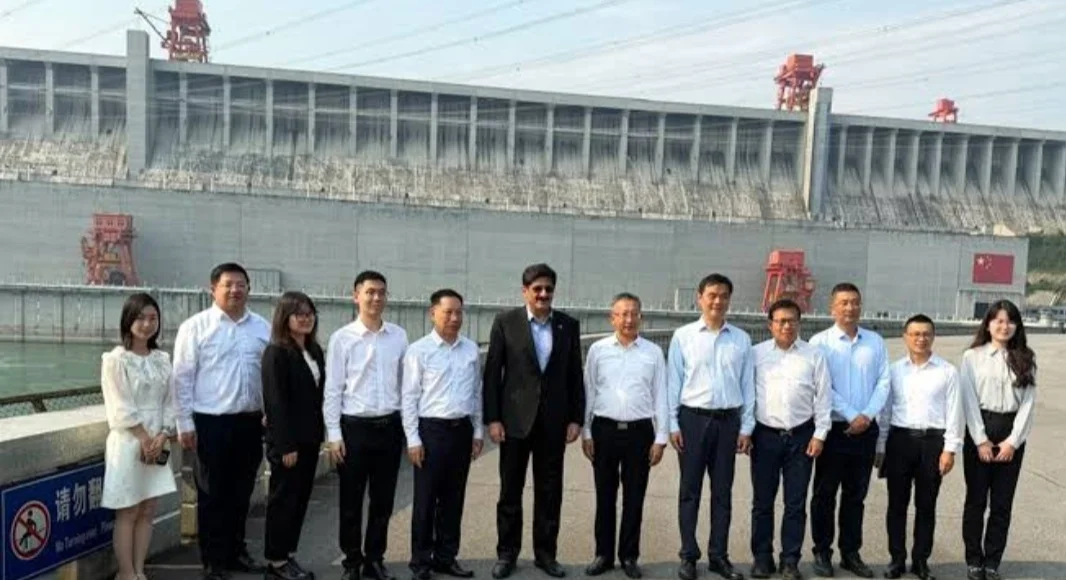
On October 12, the chief minister visited the Three Gorges Dam project in Yichang to discuss technical cooperation and opportunities for collaboration in the energy sector.
Energy cooperation remained a major focus of the visit, particularly the potential of Thar coal for value-added industrial projects, including coal-to-gas, coal-to-diesel and coal-to-urea production. Renewable energy development was also among the areas discussed with Chinese counterparts.
The provincial government also sought to attract investment in urban transport, infrastructure and digital-economy initiatives, reflecting Sindh’s broader effort to diversify its economy and strengthen industrial development through Chinese partnerships.
The visit is expected to open new avenues of cooperation between Pakistan and China, particularly in investment, technology transfer, energy security and infrastructure development. The signing of 16 MoUs reflects the potential for stronger economic engagement and mutually beneficial partnerships between Sindh and Chinese enterprises.
CM Syed Murad Ali Shah and his team deserve appreciation for their efforts to promote investment in Sindh and strengthen the longstanding friendship between the two countries. Their engagement with Chinese officials, business leaders and educational institutions highlights the importance of sustained dialogue and practical cooperation.
If translated into concrete projects and implemented effectively, the agreements could contribute to economic growth, job creation, improved public services and technology transfer in Sindh, while creating new opportunities for businesses in both countries.
The visit has reinforced the importance of Pakistan-China friendship and raised hopes that the discussions and agreements will lead to tangible results. Effective follow-up, timely implementation and continued engagement will be essential to ensure that the outcomes benefit the people of Sindh and contribute to the broader economic partnership between Pakistan and China.